Why a Window Changes the Colour of a White Wall
Why a window changes the colour of a white wall: learn to read daylight, direction and nearby surfaces before choosing paint or judging a shade.
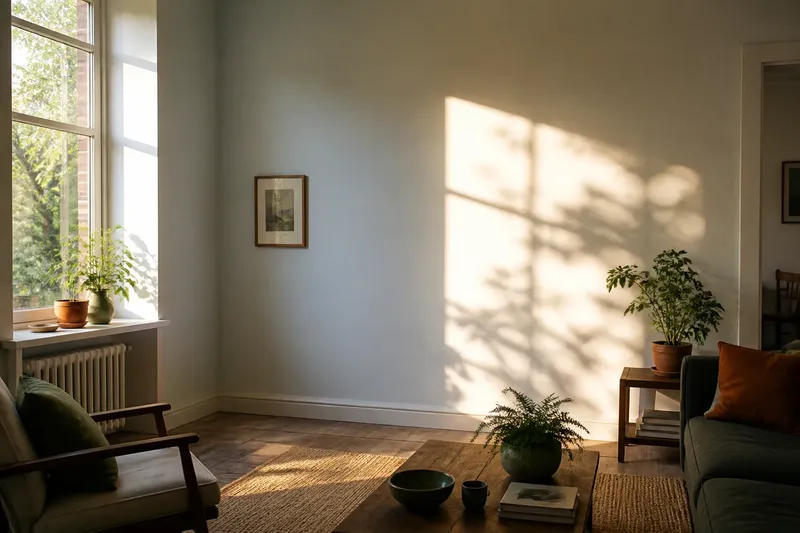
Why a window changes the colour of a white wall becomes obvious when a patch of morning light reaches one side of a room and leaves the other in shade. The wall has not changed, but the light arriving at it has. A white surface reflects much of that light back to your eyes, so shifts in daylight and surroundings can alter the colour you perceive.
That is why a white painted wall may seem faintly blue near a north-facing window, warmer beside a sunlit south-facing one, or greenish where foliage is reflected outside. These impressions are not necessarily flaws in the paint. They are clues about the light and colours reaching the surface.
What does a white wall actually reflect?
White paint is not a source of white light. It reflects light from its surroundings. The daylight that reaches a wall includes a mixture of colours, and the balance changes with the sky, the position of the sun and the room’s orientation. The wall reflects that mixture, modified by the paint’s own pigments and finish.
Your eyes and brain also adjust to changing light. If a room is lit by daylight that seems cool, you may gradually perceive its whites as more neutral. Move into a warmer-lit space and the same wall can appear cooler by comparison. This adaptation helps you see objects across varied conditions, but it can make a quick colour judgement unreliable.
Paint called white can carry a subtle undertone: yellow, red, blue, green or grey. The undertone is easier to notice beside another white than in isolation. A warm white may look creamier next to a cooler white, even if it looks neutral against a coloured wall. The name on the tin is a starting point, not a prediction of how the wall will look in every room.
How does window direction affect the wall?
Direction shapes the character of daylight, but it does not dictate one fixed colour. A north-facing window often receives less direct sun, so its light can feel cooler or more even. A south-facing window may admit stronger direct sunlight for parts of the day, bringing warmer, sharper patches that move across the wall. East-facing rooms commonly receive their most direct light earlier; west-facing rooms later.
Buildings, trees, balconies and neighbouring walls can alter those patterns. A window shaded by a tree may cast a greenish influence, while light reflected from a brick building can lend a warmer tint. Even on the same day, a bright patch may shift position or disappear as clouds pass.
Look at the wall as well as the window. A surface facing the glass receives more direct light than a return wall set at an angle. The window’s reveal, deep sill or curtain can also block or redirect light. As a result, one continuous painted wall can show a brighter, warmer area near the opening and a muted, cooler-looking section farther away.
Why do nearby colours tint white paint?
Light bounces. When daylight strikes a coloured object, some of its colour can be reflected onto nearby surfaces. A white wall beside a leafy garden may pick up a soft green cast; a terracotta planter or red curtain can contribute a warmer tint. Strong colours are more noticeable, but pale surfaces can reflect colour too.
The effect depends on the object’s position, brightness and distance, as well as the direction of the light. A coloured rug on the floor may influence the lower wall if light reaches it, while a dark sofa can make nearby white paint seem brighter by contrast without necessarily tinting it. These are different effects: reflected colour changes the light reaching the wall, while visual comparison changes how the wall seems beside another surface.
Interior finishes matter as well. Glossy or satin paint reflects more distinct highlights than a matt finish, so a bright window shape may appear on it. Matt paint scatters reflected light more broadly and can make small variations look softer. Neither finish removes the influence of daylight; each changes how that influence is seen.
How can you observe a wall before judging its colour?
Give the wall time to show its changing conditions. Observe it at different times, including when the window receives direct sun and when the light is indirect. If the sky changes, note that too. A quick glance records one moment; repeated observation helps distinguish a persistent undertone from a temporary cast.
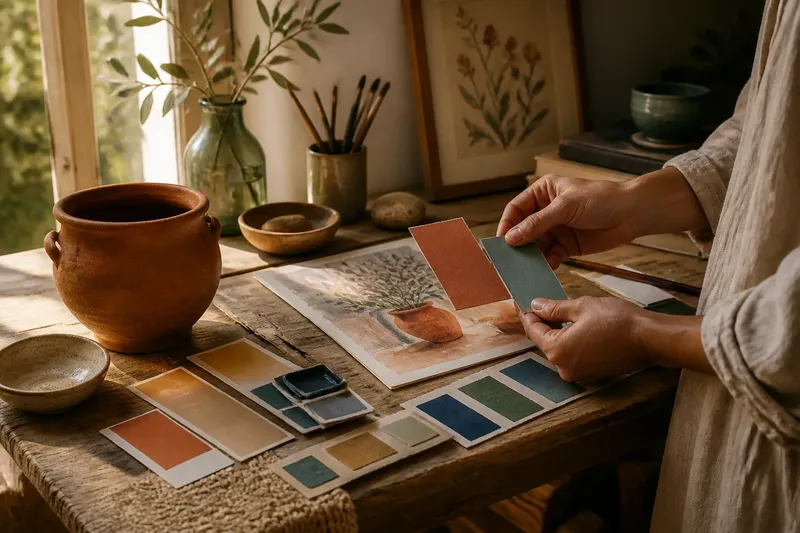
Use a large sample of the actual paint on a movable card or a suitable test area, rather than relying on a small colour chip. Place it near the wall and view it in several positions: close to the window, farther into the room and on a wall that faces a different direction. Keep the sample upright, since a flat card lying on a table catches light differently.
Say you are considering a soft white for a room with an east-facing window and a green garden outside. Imagine placing a painted sample beside the window in the morning, then moving it to the far wall later in the day. If it looks greenish only when garden light reaches it, that suggests the surroundings are contributing to the shift; if it remains creamy in both places, the paint’s undertone may be more consistent. The useful result is not a verdict from one glance, but a clearer sense of what changes and what stays.
For a fair comparison, keep the sample and viewing angle consistent. Avoid judging it directly beside a bright lamp, a coloured object or a strongly contrasting swatch. Step back, then look again after your eyes have adjusted. If you use a phone photo, treat it as a record of the scene rather than a reliable colour reference: screens and automatic camera adjustments can change how whites appear.
When choosing paint, check the manufacturer’s label and instructions for the product and sample method. If the choice matters across several rooms, compare the same candidate in each one; the same finish can behave differently under different windows and surroundings.
Which questions help explain a shifting white wall?
Why does white paint look blue in shade?
Shade often receives more light from the open sky than direct sunlight, and that light can feel cooler. A nearby warm-coloured surface may also make the shaded white seem bluer by comparison.
Can trees make an indoor wall look green?
Yes, reflected daylight from foliage can give a nearby wall a greenish cast, especially where the window’s light reaches it. Compare the wall when foliage is lit and when the exterior light is less direct to see whether the impression changes.
Why does the same wall look different in a photograph?
A camera may adjust exposure and white balance, while a screen may display colour differently from the room. Use the photograph to remember where a light patch fell, not to settle the exact paint colour.
Does a different paint finish stop colour shifts?
No finish can remove changes in daylight or reflected colour. Gloss, satin and matt surfaces handle highlights and scattered reflections differently, so compare the finish you intend to use under the room’s ordinary light.
What should you conclude from the changes?
A white wall is a useful surface for noticing how a room receives light. Its changing appearance can reveal the path of daylight, the influence of a garden or furnishing, and the difference between direct sun and shade. Those cues matter more than trying to name a single correct colour for the wall.
Before settling on a white, observe it across the day and in the places where it will be seen. If the colour shift is strongest near the window, consider the direction and reflected surroundings; if it follows the sample everywhere, pay closer attention to its undertone. Understanding why a window changes the colour of a white wall turns an apparent inconsistency into practical information for choosing and viewing paint.